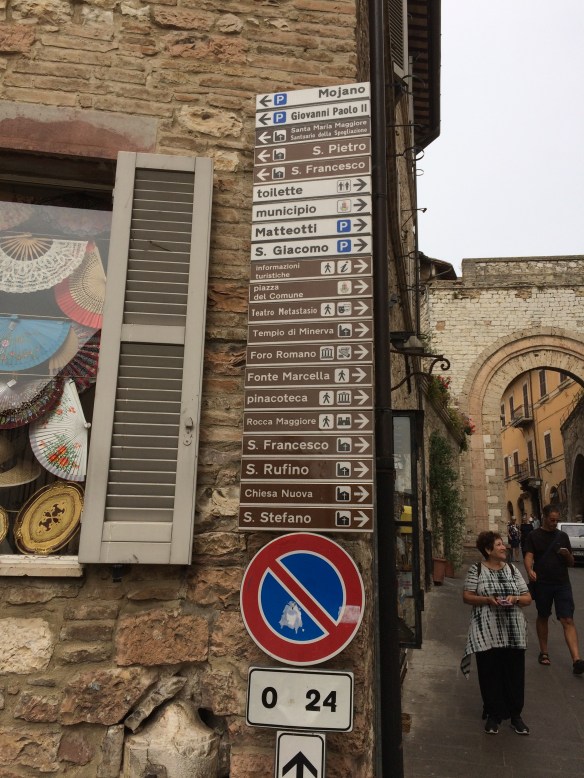
 All roads lead to the Basilica of Saint Francis (San Francesco).
 The Basilica of Saint Francis of Assisi, declared a UNESCO World Heritage site in 2000, is one of the important places of Christian pilgrimage in Italy. The basilica (begun in 1228) is built into the side of a hill and comprises two churches known as the Upper Church and the Lower Church. A crypt in the Lower Church contains the remains of Saint Francis.
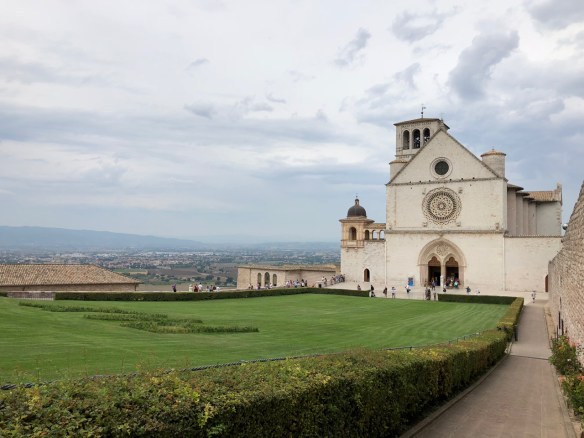 The Upper and Lower Churches are decorated with frescoes created by numerous late medieval painters from the Roman and Tuscan schools, and include works by Cimabue, Giotto, Simone Martini, and Pietro Lorenzetti. The range and quality of the works show the development of Italian art from this period.
No photography is permitted inside the basilica, so you’ll have to visit Assisi yourself to soak in the magnificent art and Gothic architecture firsthand.
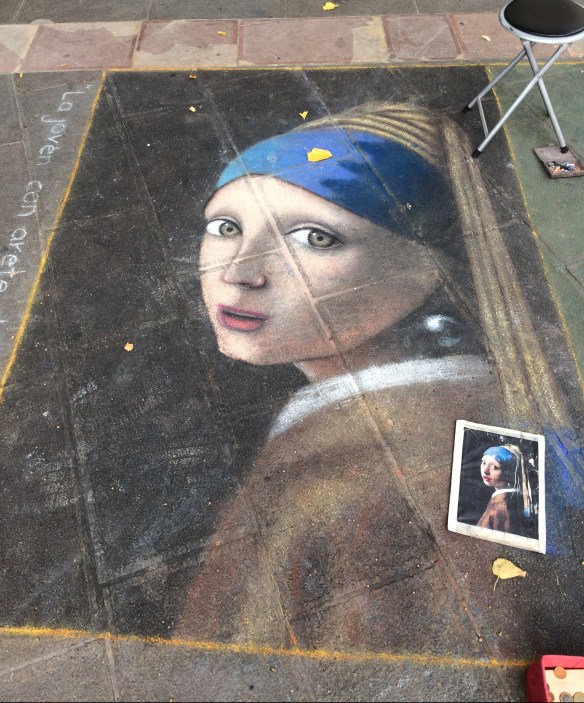 Art is everywhere! Street chalk drawing of Vermeer’s Girl with a Pearl Earring.
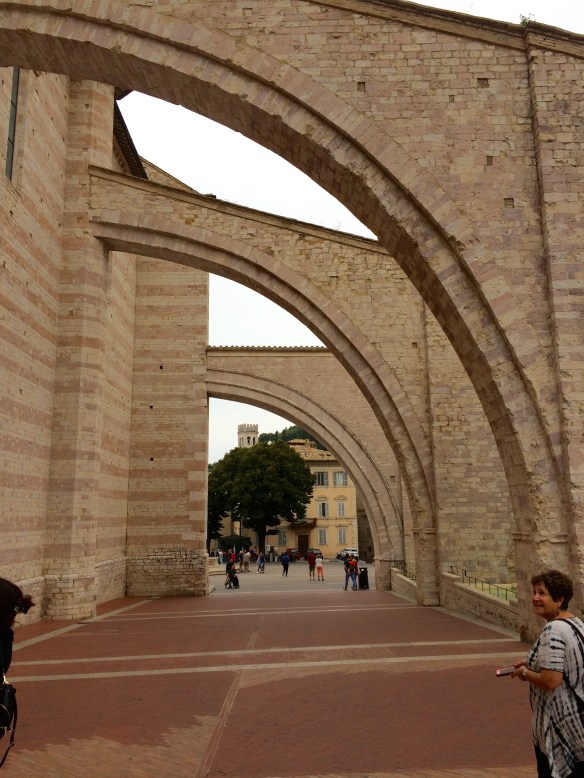 Buttresses on Basilica of Saint Clare.
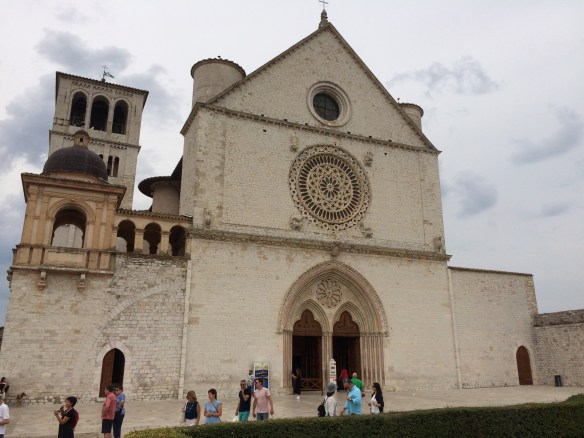 Chiesa Nuova’s choir was practising when we dropped in to visit. To minimize distraction for congregants, the larger popular churches do not permit photos or recordings.
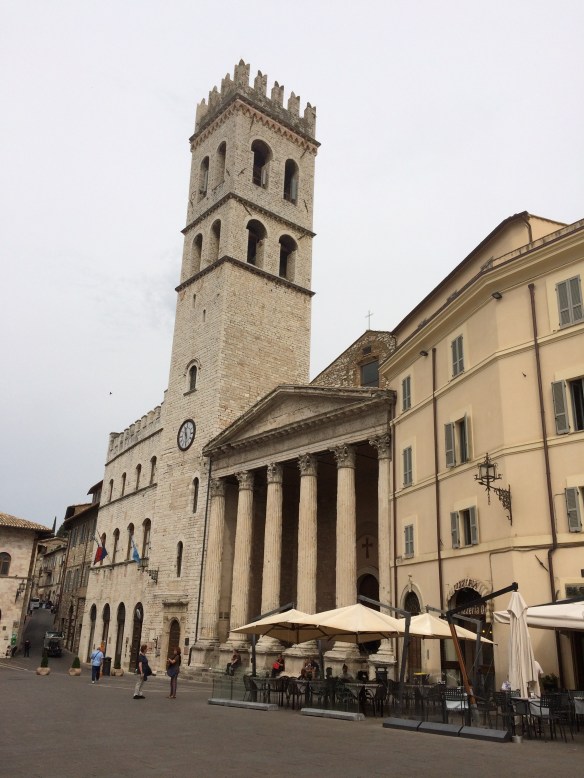 The Temple of Minerva currently houses a church, Santa Maria sopra Minerva, built in 1539 and renovated in Baroque style in the 17th century.
The temple was originally built in the 1st century BC by Gnaeus Caesius and Titus Caesius Priscus—two of the city’s quattuorviri (civil servants) who financed the construction. The temple façade features six Corinthian columns.
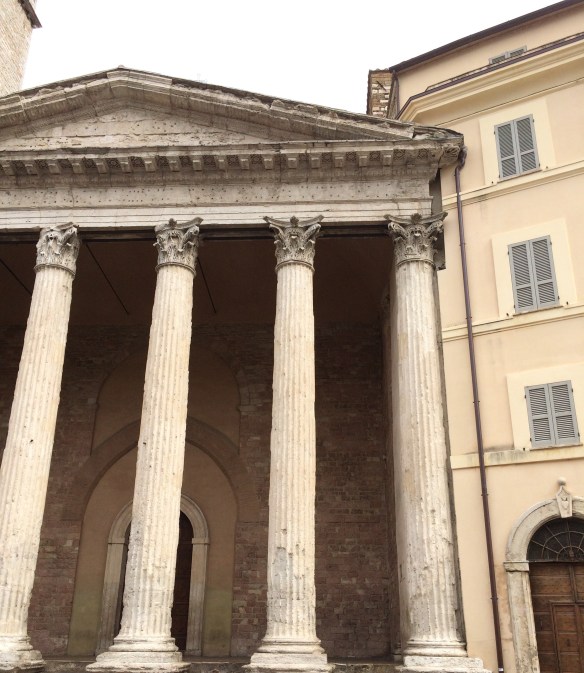
 An alcove in the street across from the Temple of Minerva.
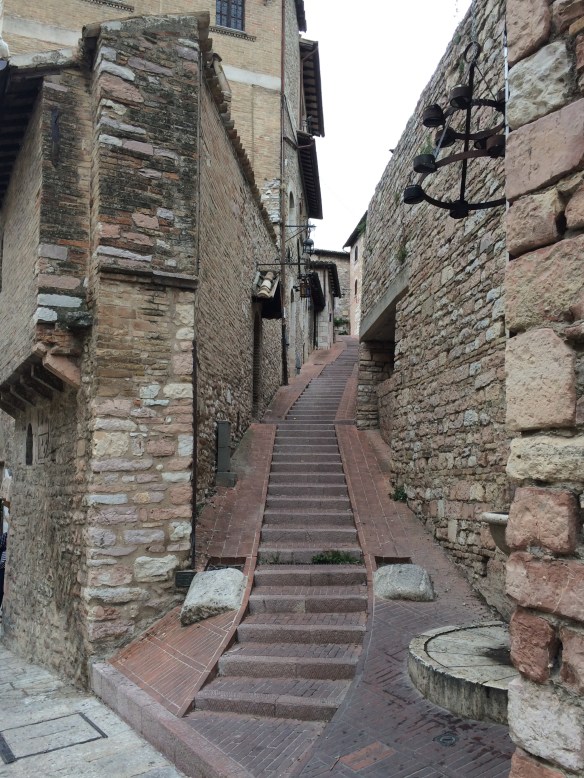 The terrain of Assisi is hilly, so it’s easy to rack up those 10,000 daily steps!
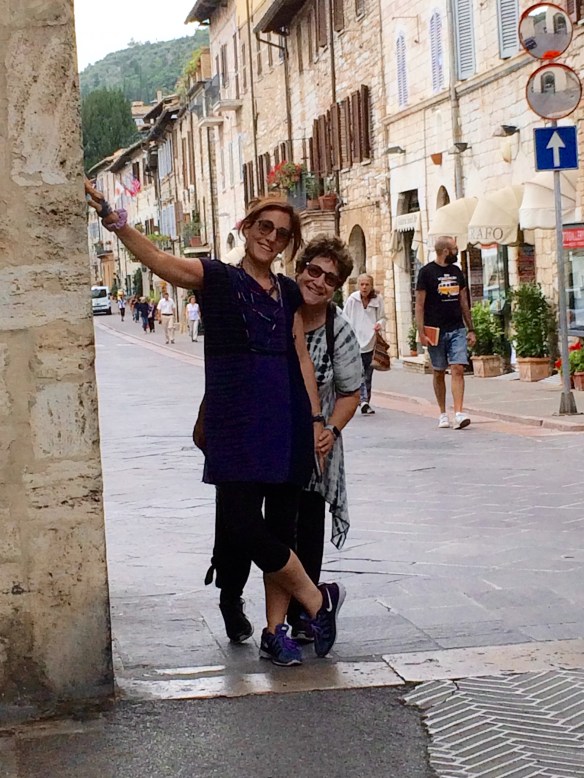 Ellen and Sally stop for a rest break to catch their breath and to refuel on gelato and cappuccino.
Coming up in the series:
 An Artist's Journey