To complement the in-class instruction, La Romita arranges field trips to nearby towns.
Perugia is one of the more picturesque towns in Umbria. Buitoni Pasta has a large presence here as well as Perugino, Italy’s premier chocolatier best known for Baci Perugina chocolates and pralines. I bought several flavours of Baci, including their newest limited edition “pink” made with ruby cocoa and wrapped in pink foil. None of the chocolate made it home. They even disappeared before i could snap a photo of them.
Pasta and chocolate— what more do you need? Oh yes, gelato.
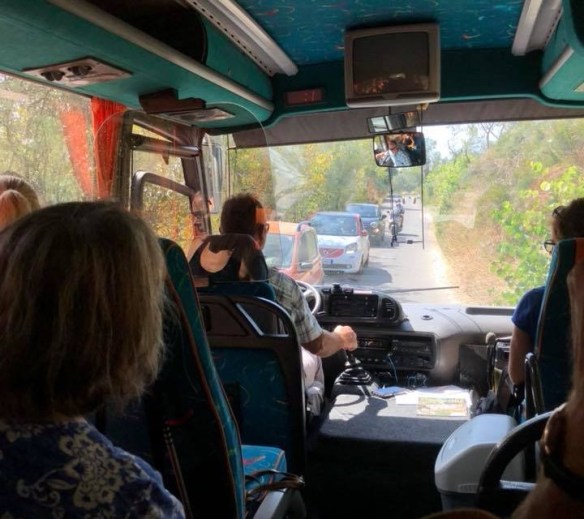 Raniero, driver extraordinaire, navigates the narrow roads to get us safely to points of interest.

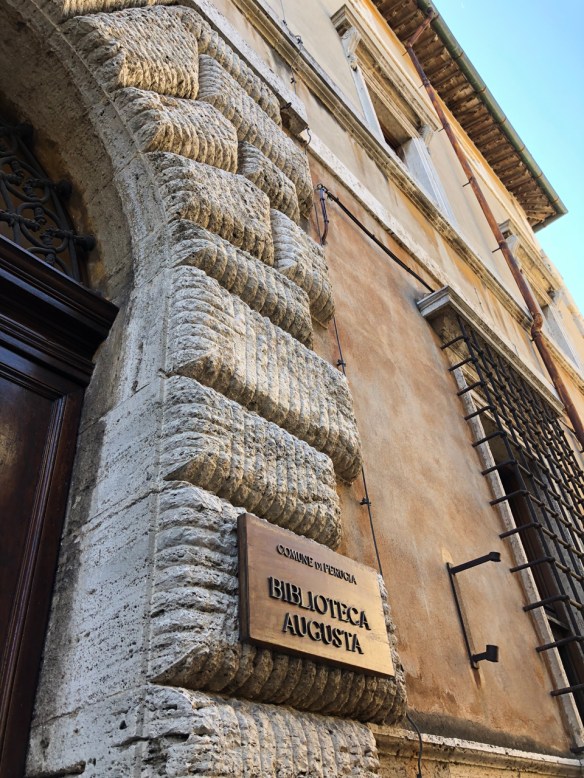 On the first outing, we visit Perugia’s Biblioteca Augusta, established in 1582.
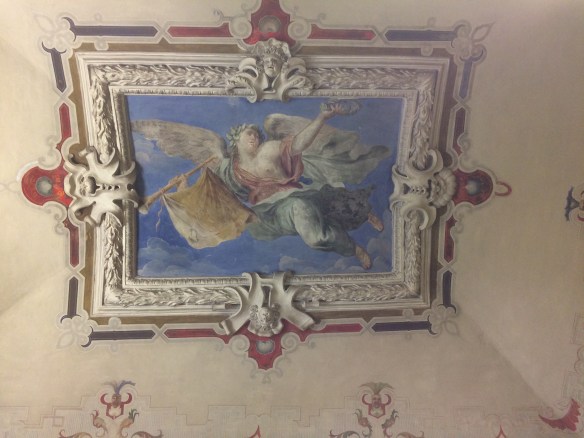
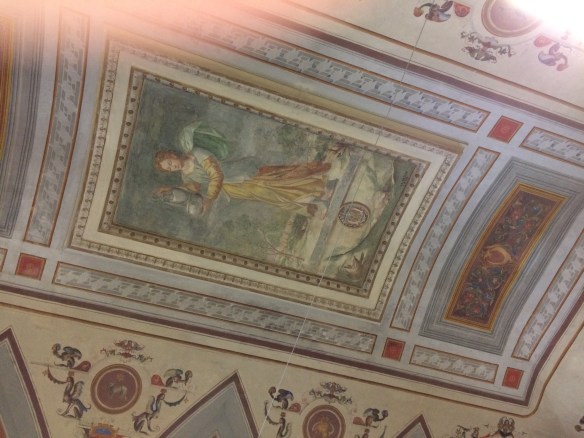 We have an appointment to view the library’s medieval manuscript collection. However, before we even get to the manuscripts, we pause to ogle the painted ceilings.
 La Romita director, Edmund Zimmerman (left), introduces library director, Paolo Renzi. Edmund and Brody provide language translation.
 The public library was founded by Prosperi Podiani who donated his extensive book collection to seed the library. See the “library stamp” Podiani created to identify one of the books he owned.
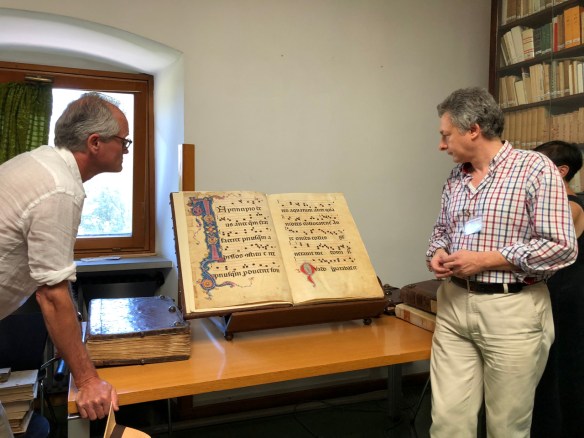 Paolo Renzi presents manuscripts from the library’s holdings, answers questions, and lets us photograph pages. Brody’s knowledge of art history places the manuscripts in context and adds to Mr. Renzi’s explanations.
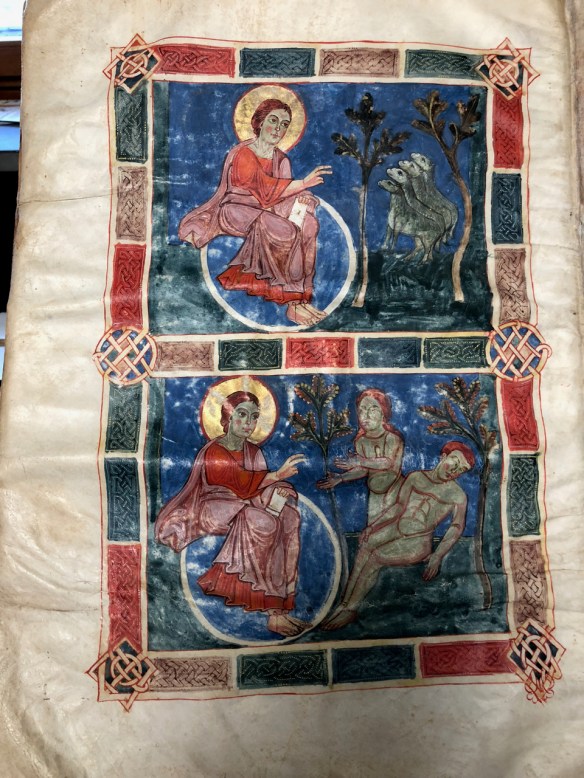
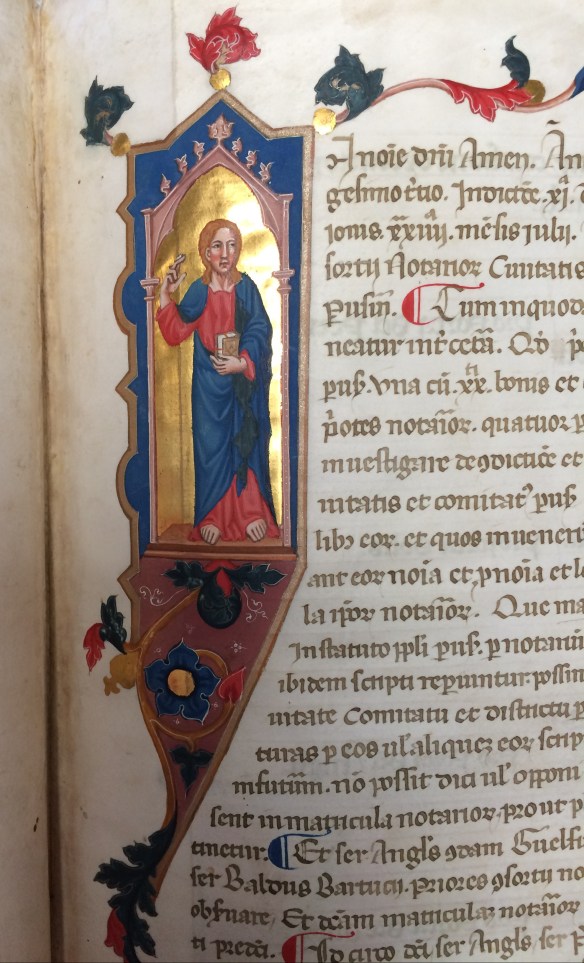
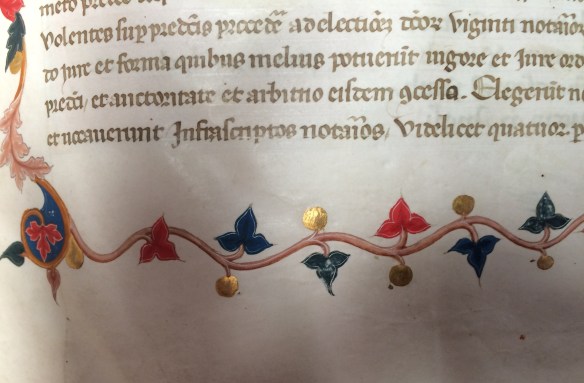
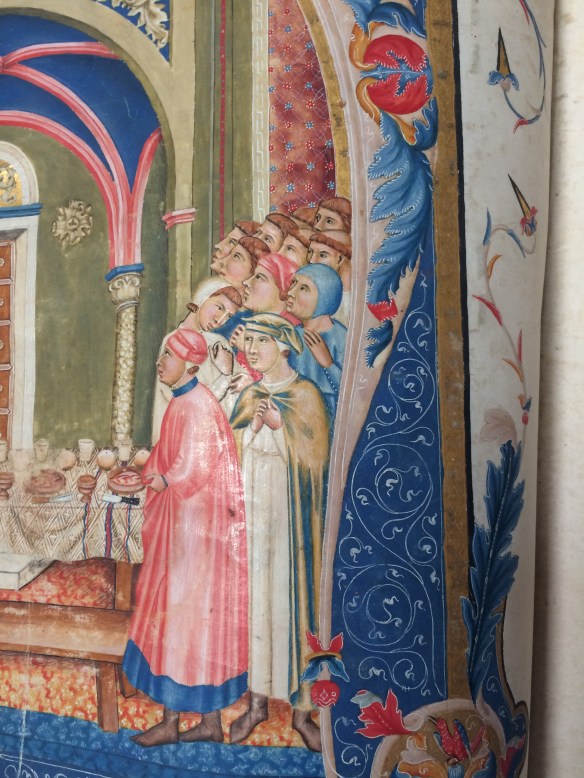
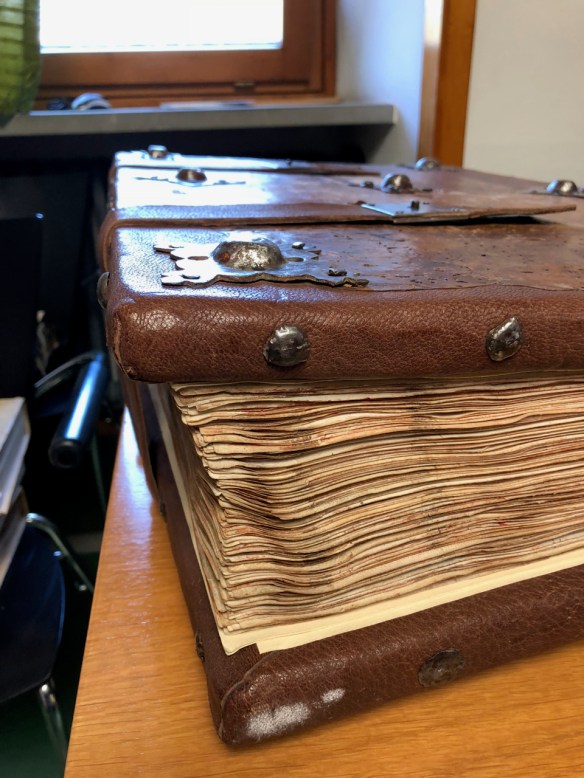 It was a privilege to get up close to a complete Bible (12th century), a choral book, a list of approved notaries from the region’s five neighourhoods (1343), and a Greek copy of Homer’s Iliad scribed by an Umbrian local (1450).
 Illuminations from 12th century Bible with images depicting the creation story.
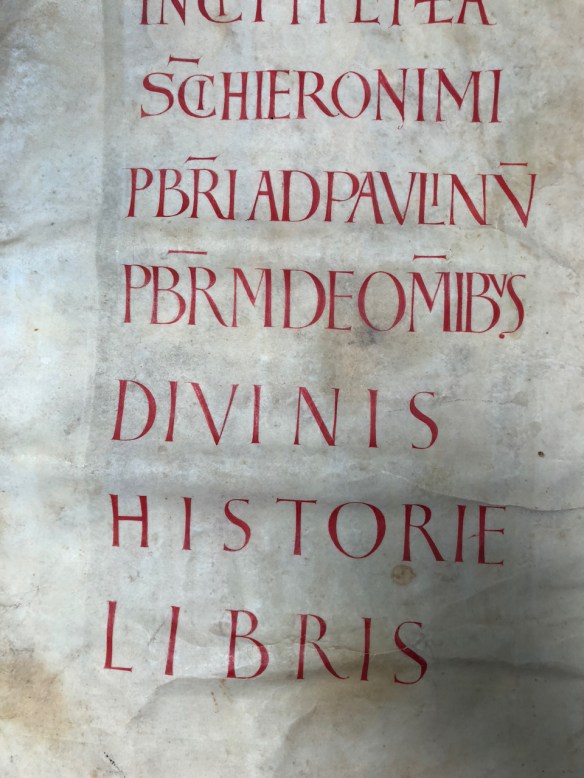
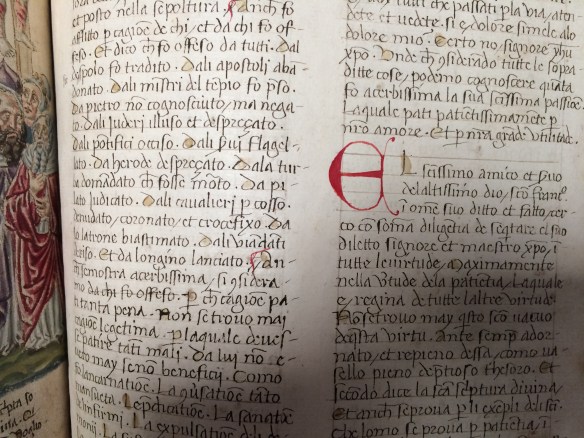
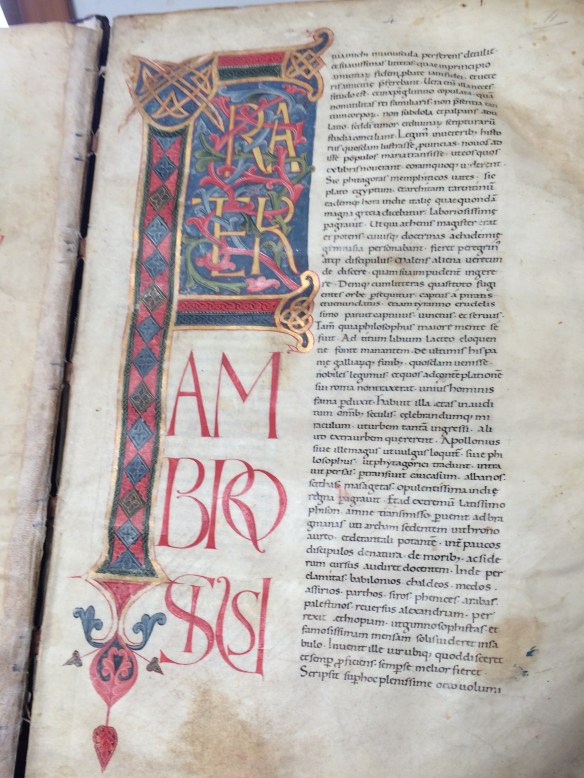 Medieval Bibles often contained prologues to help faciliate an understanding of the Scriptures. Starting with the words Frater Ambrosius (Brother Ambrose), this is Jerome’s letter to his pupil Ambrose. The initial F(rater) is often elaborately ornamented.
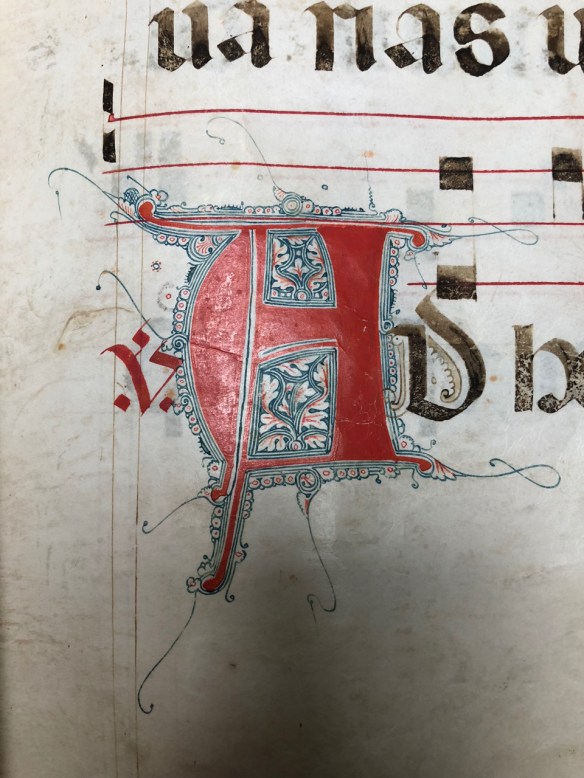
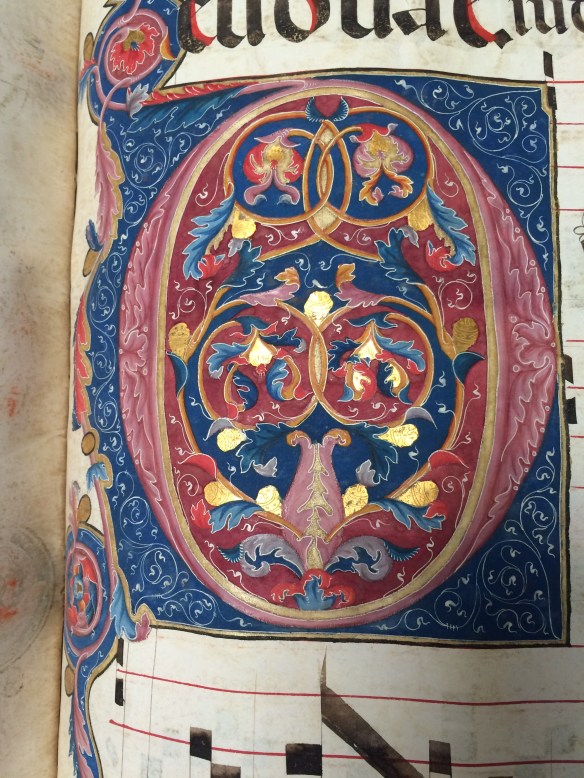
 A choral book was used by members of a musical ensemble or choir.
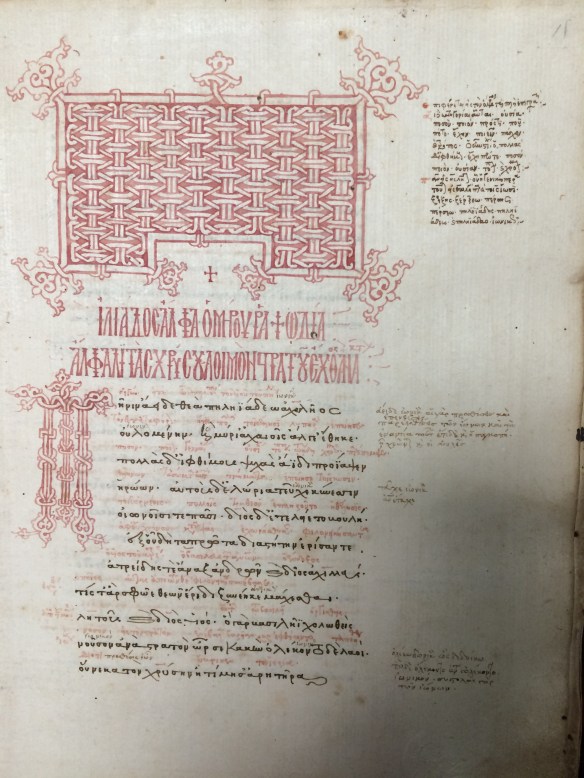 Homer’s Iliad is scribed in Greek by local Umbrian city councillor Maturanzio in 1450. A professor and ambassador, he moved to Greece for extended study of the language.
The Iliad is an ancient Greek epic poem (dated to the 8th century BC) traditionally attributed to Homer. In the standard accepted version, the Iliad contains 15,693 lines.
The Iliad is paired with the Odyssey, also attributed to Homer. Together, they are among the oldest existing works of Western literature.
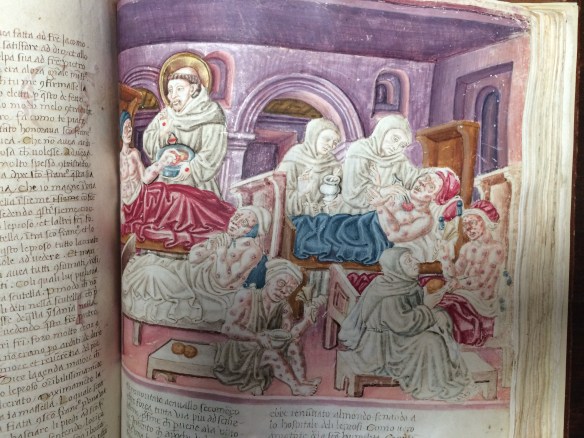 Illumination from a 16th century manuscript featuring a combination of vellum and paper folios with contributions by male and female scribes of the Franciscan order.
Coming up in the series:
Umbria: Stroncone—Choral Books
Umbria: Assisi—Basilica of Saint Francis
Umbria: Cascata delle Marmore—Manmade Waterfall
Umbria: Farewell—Ink, Paint, Paper, Passion
 An Artist's Journey