Lately I’ve been thinking about ways to reduce my carbon footprint. I’d like to adopt recycling habits in the studio that have become second nature in the kitchen.
It all started in a recent class with book artist Suzanne Moore. She lives on an island in Washington state and is concerned about what is being dumped in the ocean. During the class, she peppered her teaching with environmental tips, encouraging us to:
- use every drop of media in our palettes before washing them
- use dirty rinse water for lettering—great for tonal value
- use good paper as a waste sheet (surprising marks might emerge that could be useful in the final product)
- leave tools dirty until we’re completely finished using them
- keep a wet rag handy for fingertip clean-up to conserve paper towels—and accidental “fingerprinting” of masterpiece
- use small pieces of toilet paper instead of paper towel to dab, push paint around, etc.
- clean threaded paint tubes before capping for a snug fit to keep media from drying out
- be fastidious about recapping fluid media to keep it from spilling or drying out
Inspired by these tips, I’m looking for additional ways to minimize art waste released into the environment.
Back home, while clearing basement clutter, I uncovered some treasures, like the cotton dyed at an indigo workshop at the Colour Vie studio several years ago. I stashed it away, intending to sew table linens on a rainy day.
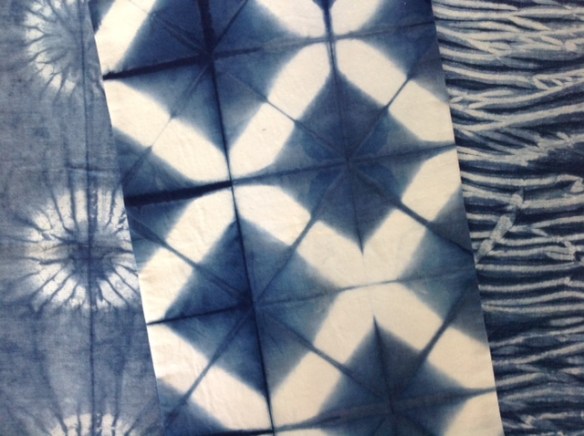
It’s been years since I’ve sewn anything. The placemats and table runner were simple designs; nevertheless, I could count on them as conversation starters at my next party.
While tidying up afterwards, I stood over the trash bin holding the leftover pieces in my hand. I didn’t have the heart to toss the dyed scraps. Granted, they were small. But I did spend two workshop days dipping, swishing, wringing and repeating to achieve the perfect shade of indigo. How could I let them go?
Google always has an answer! A search turned up patterns for quilted mug rugs. I had never heard of a mug rug, but surely my mug needed a rug. Especially a quilted one. In indigo.
As a paper artist, I always enjoy experimenting with pattern and colour. I discovered there’s an up side to working with fabric—no stained hands and no wet tools to scrub afterwards. I could see the advantages of quilting over wet media. This could be a new creative addiction…
My thanks to quilter Jeni Baker for sharing her free Scrappy Stack Mug Rug tutorial. Although her instructions were straightforward, it still took several tries for this novice quilter to square up the pieces. I sewed two mug rugs using every scrap of lovingly dyed cotton—without adding to my stash of clutter nor sending something beautiful to the scrap heap.
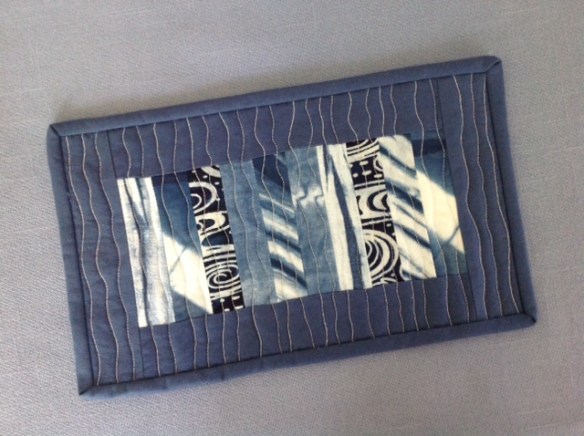
I’m congratulating my environmentally-conscious self while enjoying a cuppa, coastered by an indigo-inspired mug rug.
I believe my environmental bootprint just got a little smaller.
Have you found creative ways to reduce your footprint in the studio?
 An Artist's Journey