Once in a blue moon, I rummage through my paper drawers to sift and sort, often in search of something elusive from the mists of memory.
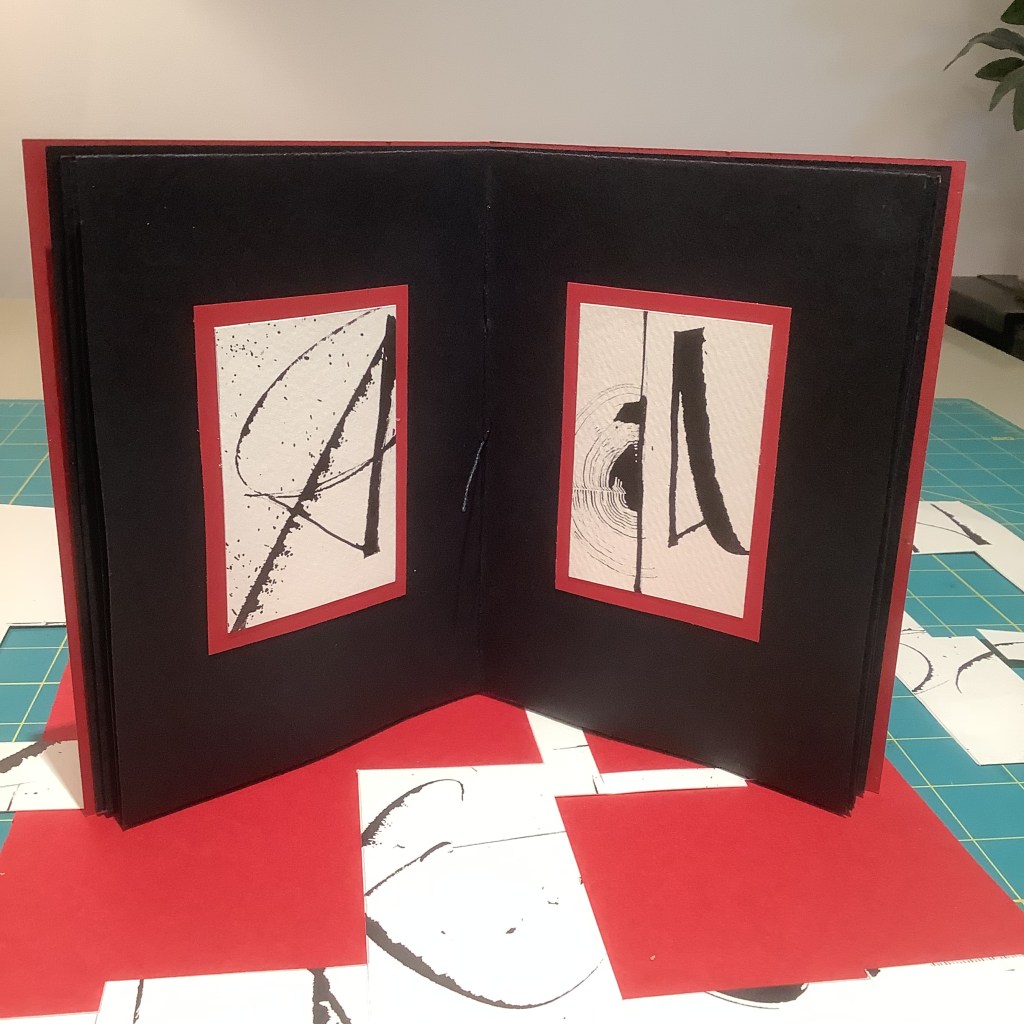
I didn’t find what I was looking for, but I did uncover some interesting lettering from a Brody class where a lice comb was used. It was a practice sheet of sumi ink on watercolour paper. The marks covering both sides were interesting, but not really worth keeping—except that they were on watercolour paper. I suppose at the time it seemed wasteful to toss out a pricey piece of paper. Or maybe I was hoping the letters would improve after some beauty sleep in the drawer. Or I thought a future project might call for some lice comb letters.

That got me thinking about how decisions are made about what is valuable and what is dispensable. When the sheet was tucked away, an unconscious decision was made to retain and store it. The practice sheet still held value for me—value not yet articulated.
Further digging produced several other pieces in the same category—practice on pricey paper. They were set aside for further examination. The word ‘ephemera’ started percolating in my brain.
Ephemera are items that are not originally designed to be retained or preserved but become a ‘collection’, oftentimes by default. The term is derived from the Greek ephēmeros which means ‘lasting only a day’.
At about the same time, a guild invited me to teach a fun workshop.
It occurred to me that it would be fun to gather ephemera that had ‘collected’ (I originally wrote that ‘I collected’ but stockpiling ephemera didn’t feel like a conscious decision) and to consider why they were still hanging around.
I’m at that stage in my life where parting with things is a thing, so this became an interesting quandary.
Could the ‘treasures’ be considered ‘new’ raw material to be converted into something else—something beautiful? Something that brings renewed joy?

While pondering, I intentionally set aside the terms ‘junk’ and ‘recycling’—that’s a different mindset. Instead, I asserted the value of the ephemera—after all, I kept them for a reason. My art practice could transform them into something worthy of my creativity.
Or was I simply engaging in semantics? I resisted returning the sheets back to the drawer. When I’m not sure, it’s an opportunity to experiment. Playing can lead to delving deeper. To increase the challenge, I established one parameter: incorporate only ephemera in the final result. Back I dove into the drawers.
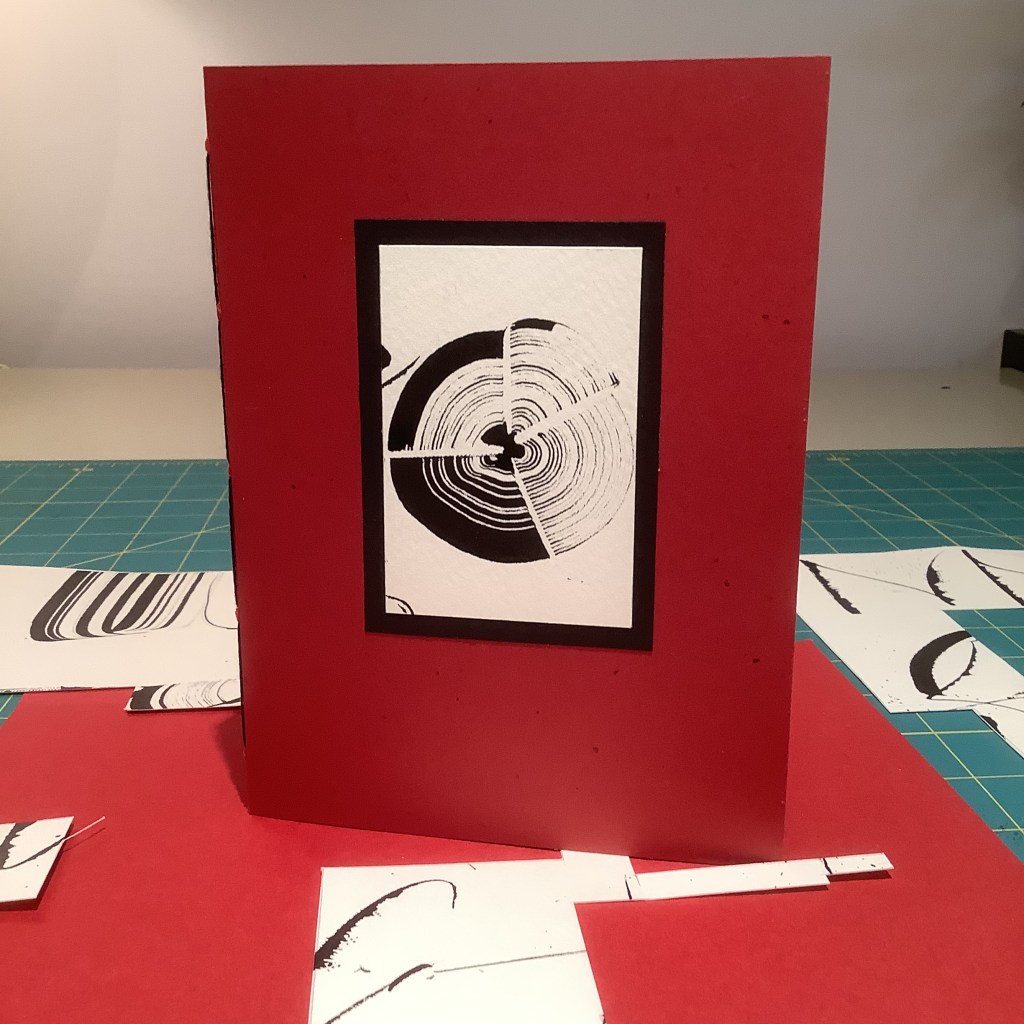
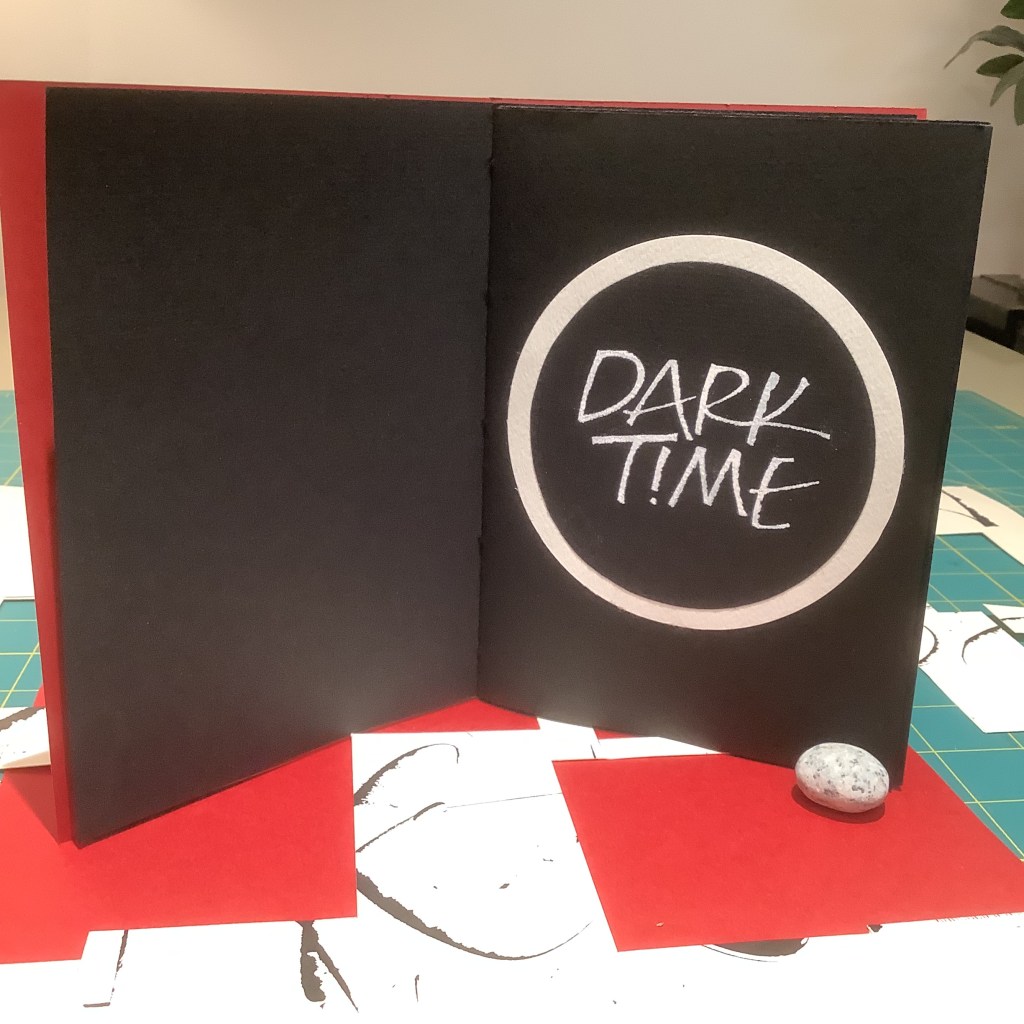
After two days of intense play, a hand bound book emerged. There’s something special about working with vintage materials you love—even if you can’t articulate their precise appeal.
Oh…maybe this is the seed for a fun workshop!

 An Artist's Journey