I am currently offering five classes. For further details or to discuss the feasibility of a class for your organization, please contact me. If you have an idea for a topic, let’s discuss.
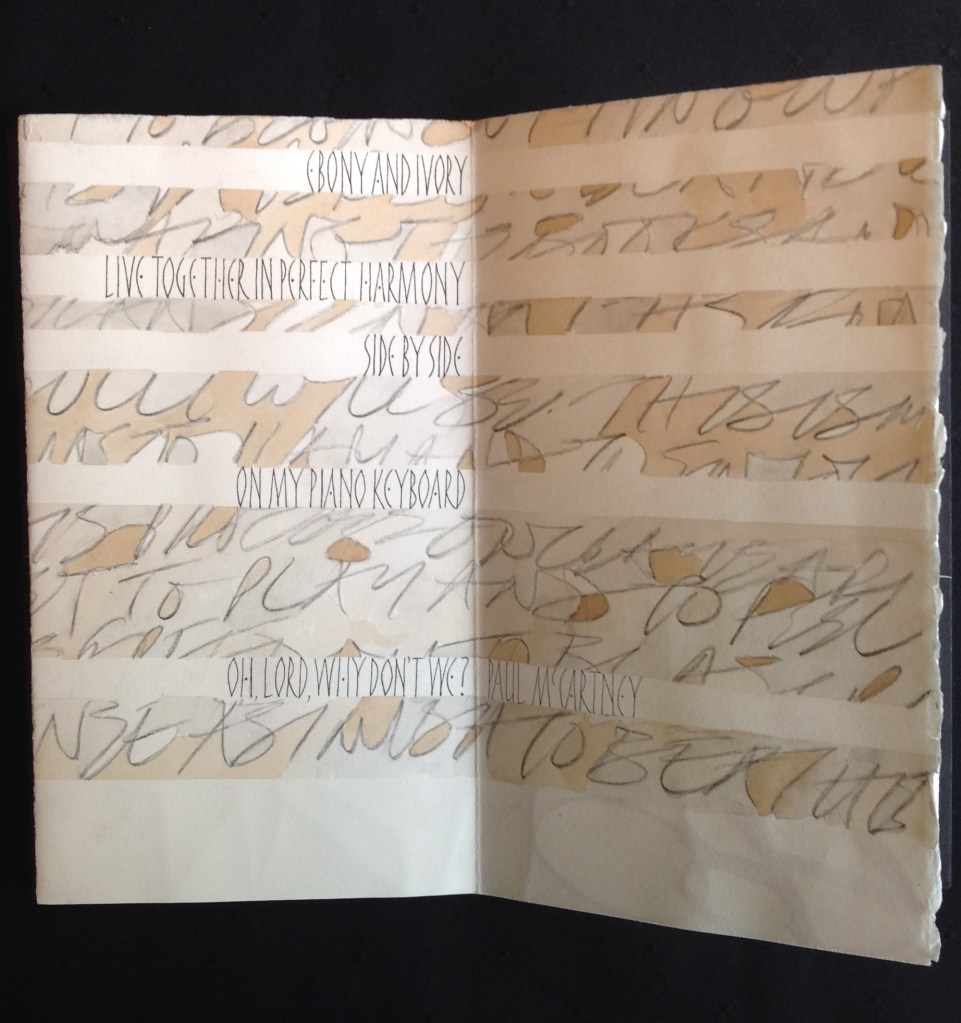
Freewheeling: Design Without Fear
All skill levels — 2- to 4-day workshop
Definition
ˈfrēˌ(h)wēliNG/ (adjective) characterized by a disregard for rules or conventions; unconstrained or uninhibited
Come for a Ride on the Wild Side
Whether you’re a novice or have been practicing for years, take a side trip to explore ways to present your hand lettering. Spend several days freewheeling. No pre-planning. Get in. Buckle up. Come for a ride on the wild side. You drive, I’ll guide. The path is different for every traveller.
Sometimes you need to get lost before you are found.
How lost?
Lettering requires discipline. This tight approach to letterforms can creep into the way you design. Set aside this tight approach for a less formal one. Let loose on design but continue to build the strength of your letterforms.
Map Your Adventure
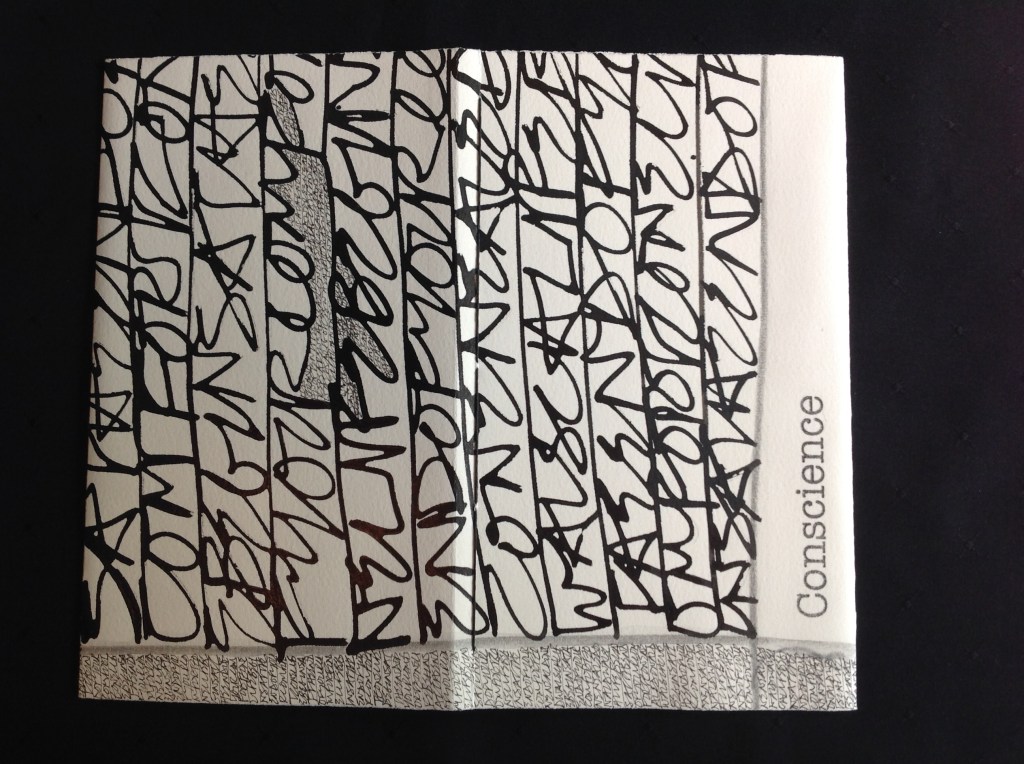
Begin your journey with a short text of your choice. Play with familiar and funky tools—try new ones! Through guided exercises, you’ll create pages to bind into a book.
Ready?
Pack your sense of adventure. I’ll help you unpack your wild side. You’ll be freewheeling before you know it!
Willow: a Monoline Classic
All skill levels — 1- to 2-day workshop
Learn Willow
Charles Rennie Mackintosh (1868-1928), a Scottish architect, designer, and painter introduced his distinctive lettering during the art nouveau period. The letters first appeared in the captions on his architectural plans. Subsequently, a number of font designers based their typefaces on his handwritten letters.
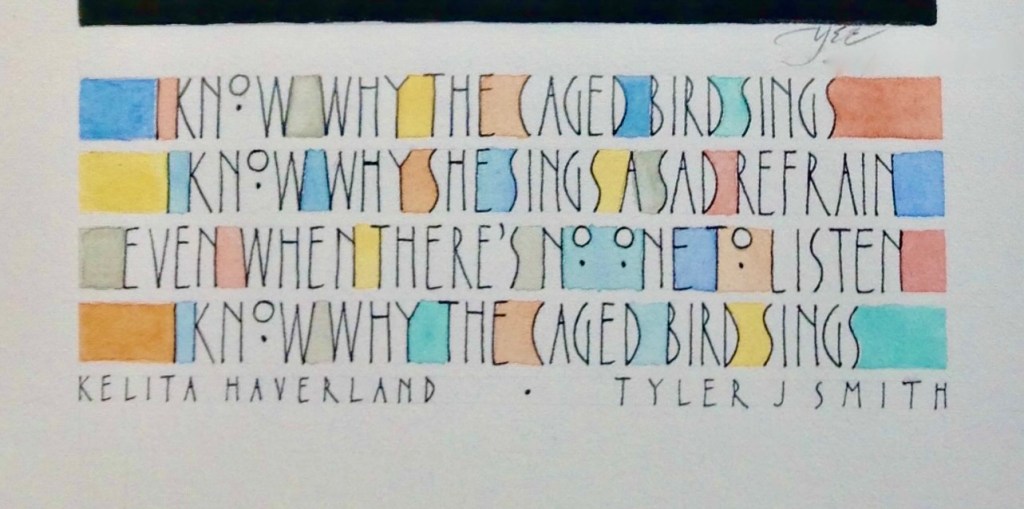
I adapted Mackintosh’s hand for a commission, and called it Willow (after his Willow Tea Room designs). It is taught as a hand drawn monoline style and can be stacked for texture and tinted to mimic his famous stained glass.
Whether you’re new to calligraphy or want to polish tarnished skills, the Willow hand will ease you into drawing letters with confidence while sharpening your critical eye to notice shape and line quality.
Novice and skilled calligraphers will pick up studio tips while designing a composition using their new-found letters.
Decorate a Garment
Need more time to master Willow? Spend a second day scribing text on a pre-made cotton garment—decorate a new item or give life to that much-loved closet piece. Create a washable, wearable work of art.
Lettering on fabric is slow and deliberate, allowing you time to master the letter shapes. Textile markers are easy to use for monoline alphabet practice.
Long after the workshop is over, you’ll be showcasing your hand lettering on a one-of-a-kind item!
Monoline Alphabet: Your Choice
The Willow class can easily be adapted. Rather than focus on Willow, students with experience in any monoline hand can spend a day learning about lettering on fabric and then scribing on a pre-made cotton garment—new or upcycled. Novices are welcome to use Zentangle or their own handwriting.
Washable, Wearable Words
All skill levels — 2-day workshop
Learn Brush Lettering
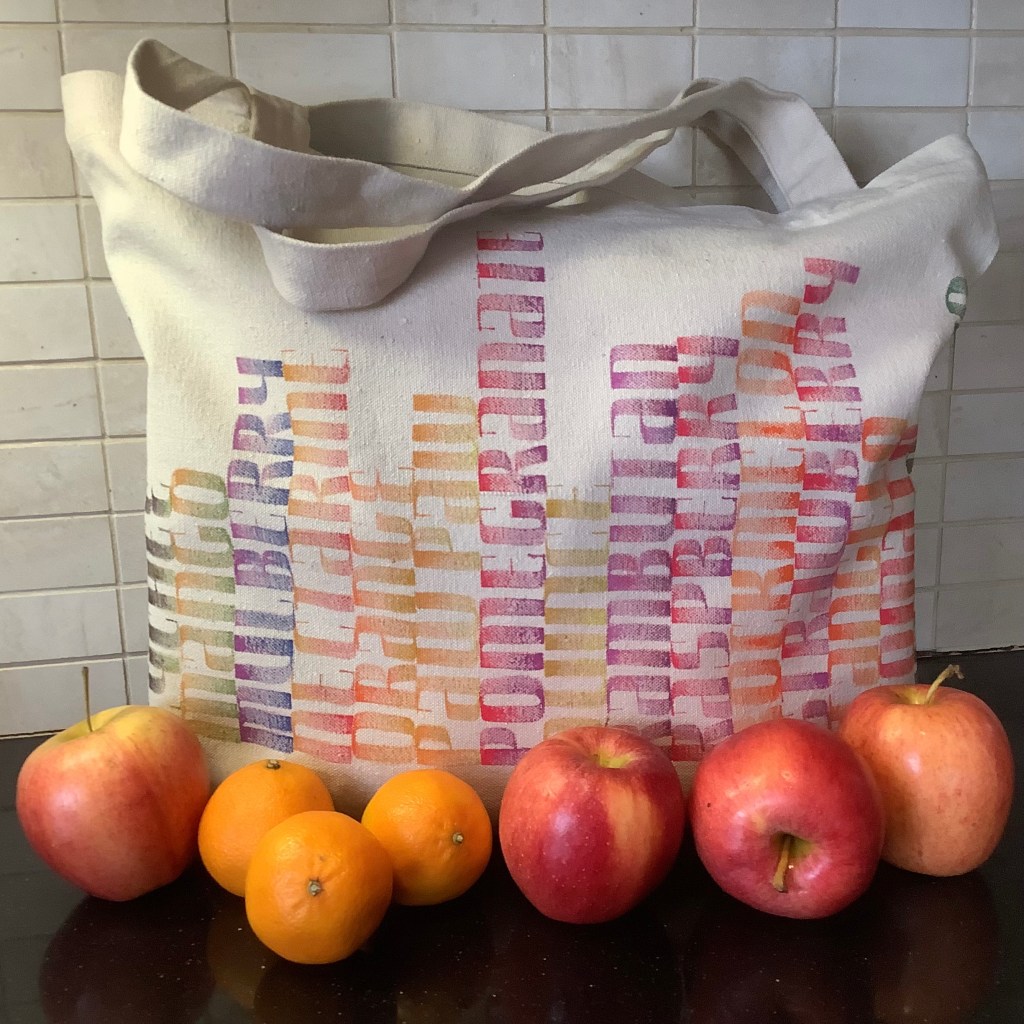
If you have never lettered with a flat brush, this style will be an excellent introduction. After learning the basics on paper, you’ll move on to fabric.
Scribe on Fabric
Lettering on textile is slow and deliberate, allowing you time to practice using the brush and to gain a strong grasp of the letter shapes.
Quilters looking for one-of-a-kind fabric might consider incorporating brush lettering into their next quilt design. In class, you’ll transform plain cotton using texture and text.
Letter using one colour and tint with another to make your letters pop. Letter the alphabet as a border embellishment; highlight a quote as a central design; or, for the adventurous, use letters as surface texture in an all-over pattern. After all that practice, the chisel-edged brush letters will definitely be integrated into your muscle memory!
Brush lettering on cotton. Explore the possibilities that lead you to search out other washable, wearable items to showcase your chisel-edged brush letters. Create clothing that’s uniquely yours!
Ephemera Re-Imagined
All skill levels — 1- to 2-day workshop
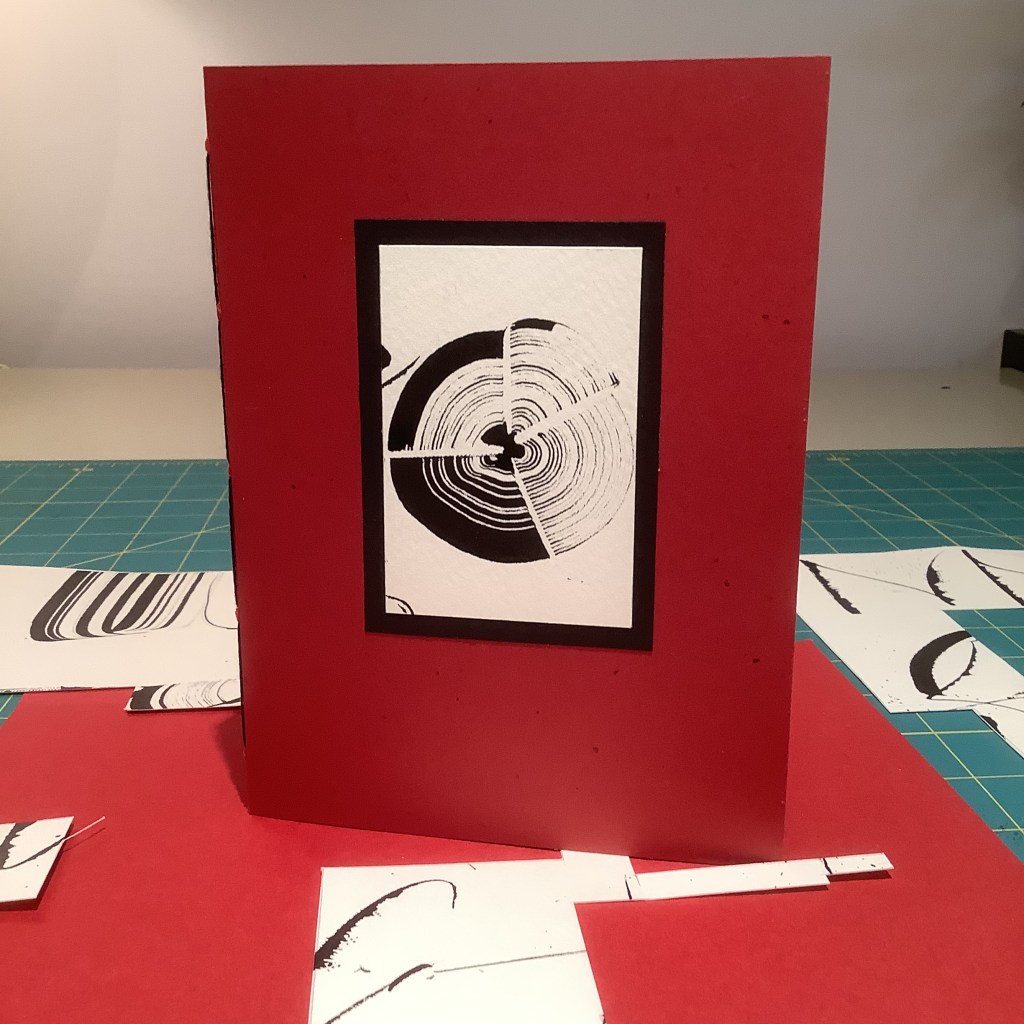
Ephemera are items that are not originally designed to be retained or preserved but become a ‘collection’, oftentimes by default. The term is derived from the Greek ephēmeros which means ‘lasting only a day’.
Are you reluctant to part with art materials that bring joy—things that could have been discarded—but were not? Nevertheless, there they are, taking up space.
Maybe the scraps in your collection have the potential to be re-imagined—to become something else, something beautiful. Something that brings renewed joy.
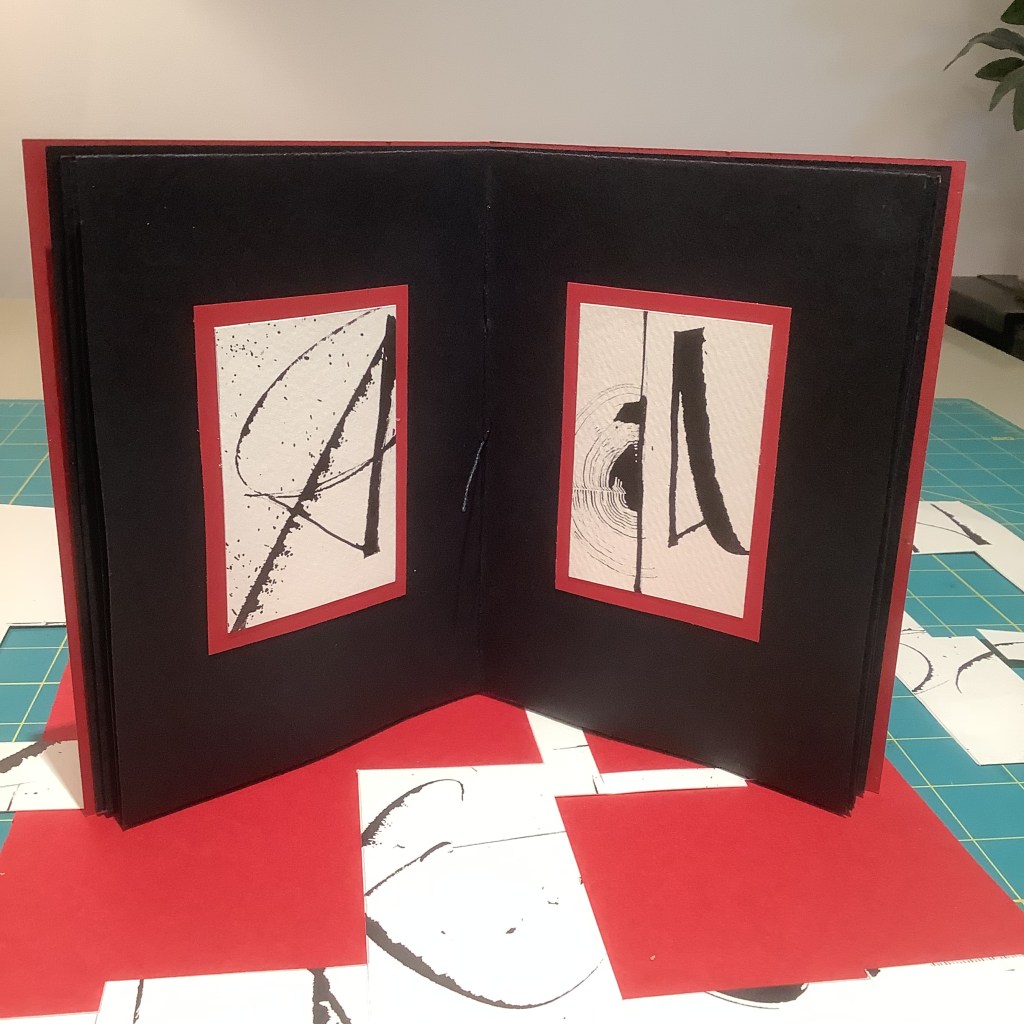
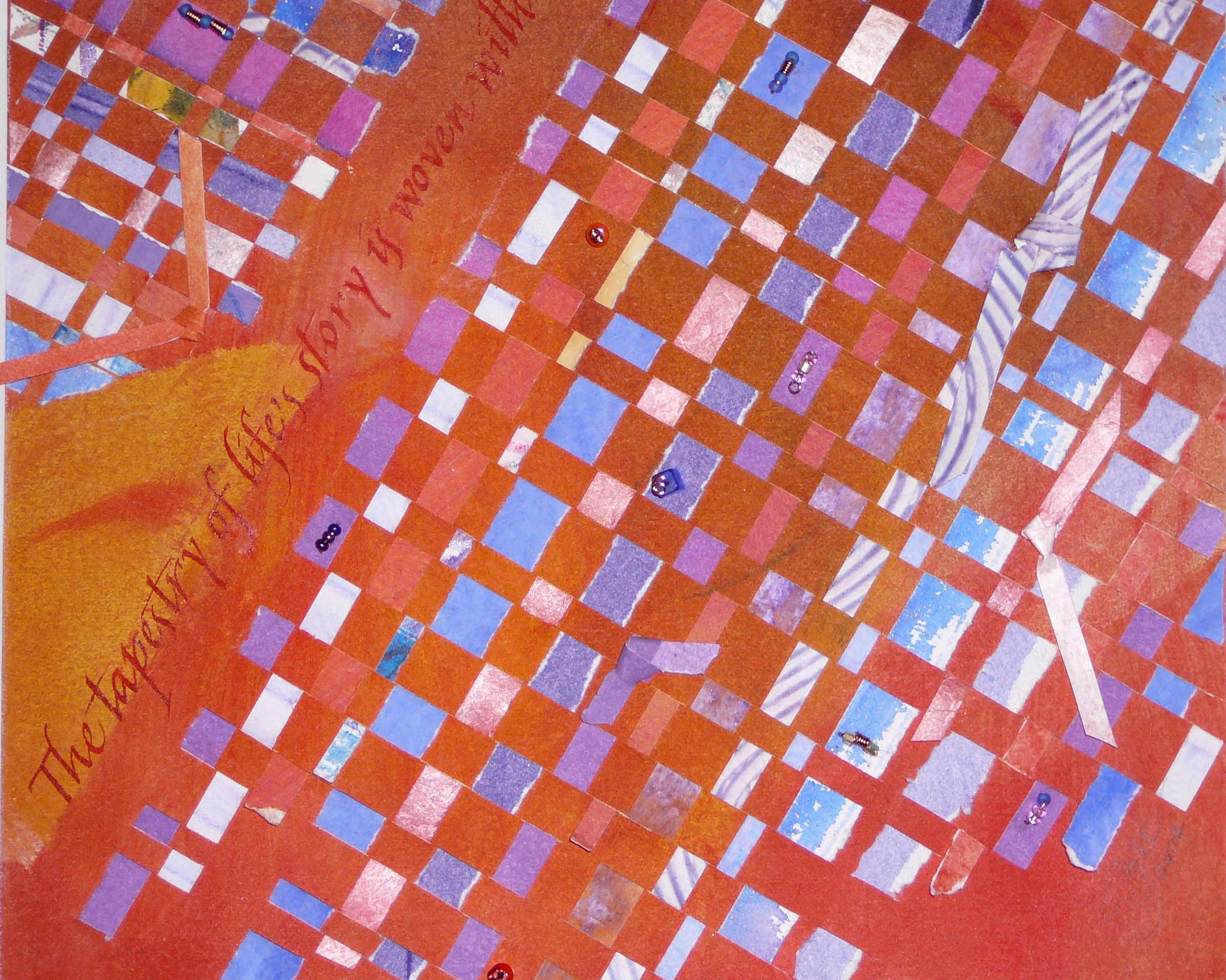
Gather your stuff for a conversion experience. Let’s chase magic. Curate a ‘scrap’ book or broadside of much-loved snippets. Collage bits and bobs to invent a whole. Craft your beloved offcuts into oddly-shaped cards to slip into funky envelopes. Weave a pattern from paper threads. Your lettering practice? It could have an out-of-drawer experience in a finished composition!
Not junk! I have intentionally avoided the terms ‘junk’ and ‘recycling’—that’s a different mindset. Instead, you are asserting the value of your ephemera—after all, you kept them for a reason. You are taking treasured raw materials and using your art practice to turn them into something worthy of your creativity. Ephemera re-imagined!

Paste Paper Play
All skill levels — 1- to 2-day workshop
Paste is a simple way to add colour and texture to plain paper. Of course, your pasted papers can be used in bookbinding projects as covers and endpapers. Or to decorate handmade boxes. But what about lettering?
Calligraphers may be mystified about why they’re not successful in incorporating lettering on their pasted paper surfaces. It’s not their lettering, it’s their pasted designs. Uncover the secrets of designing papers for lettering.

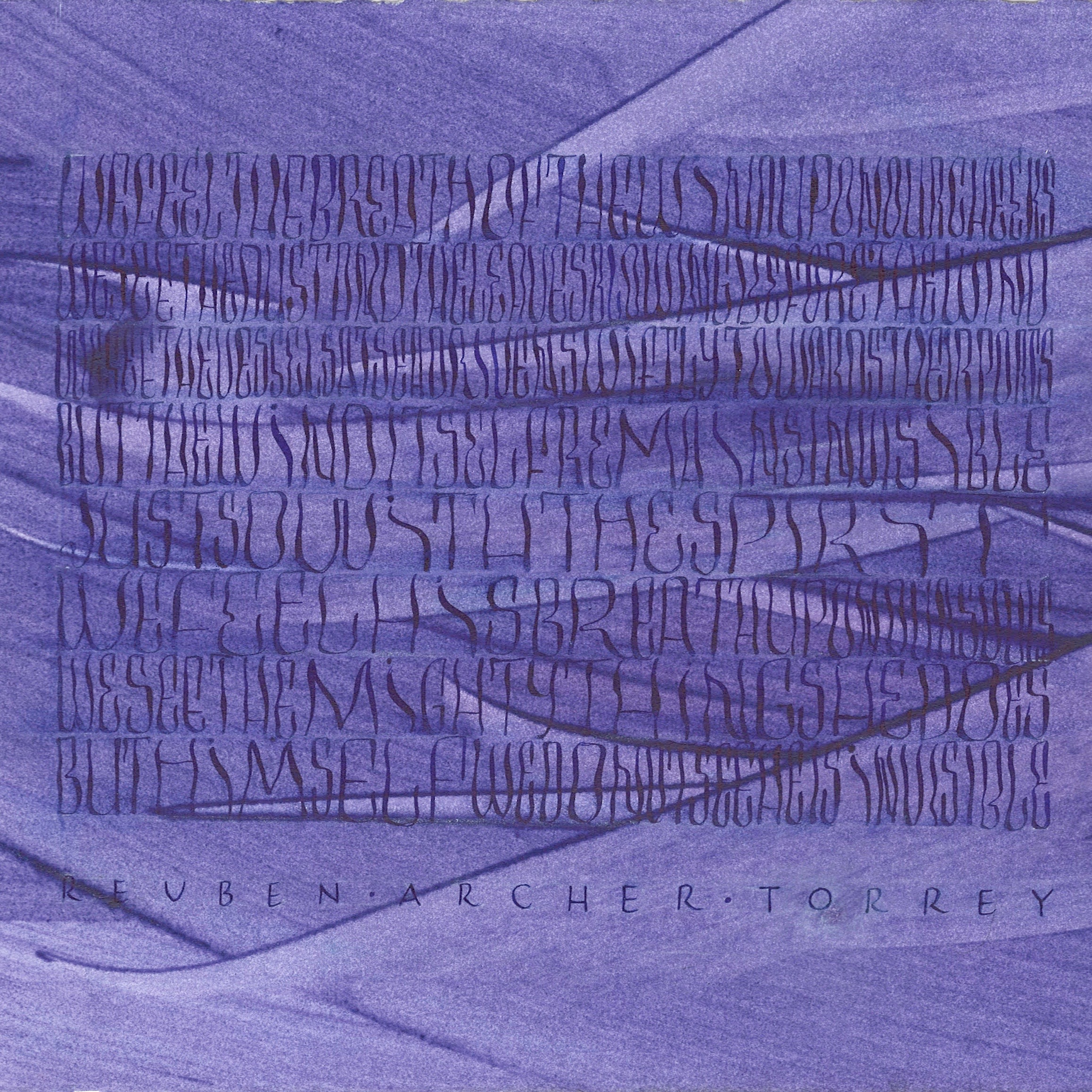
A one-day workshop will introduce you to the basics of decorating paper with paste. But why stop there?
Add a second day to maximize the secrets you learned on day 1 to specifically integrate lettering. Bring your tools and wet media to express your creativity using favourite lettering hands unique to you.
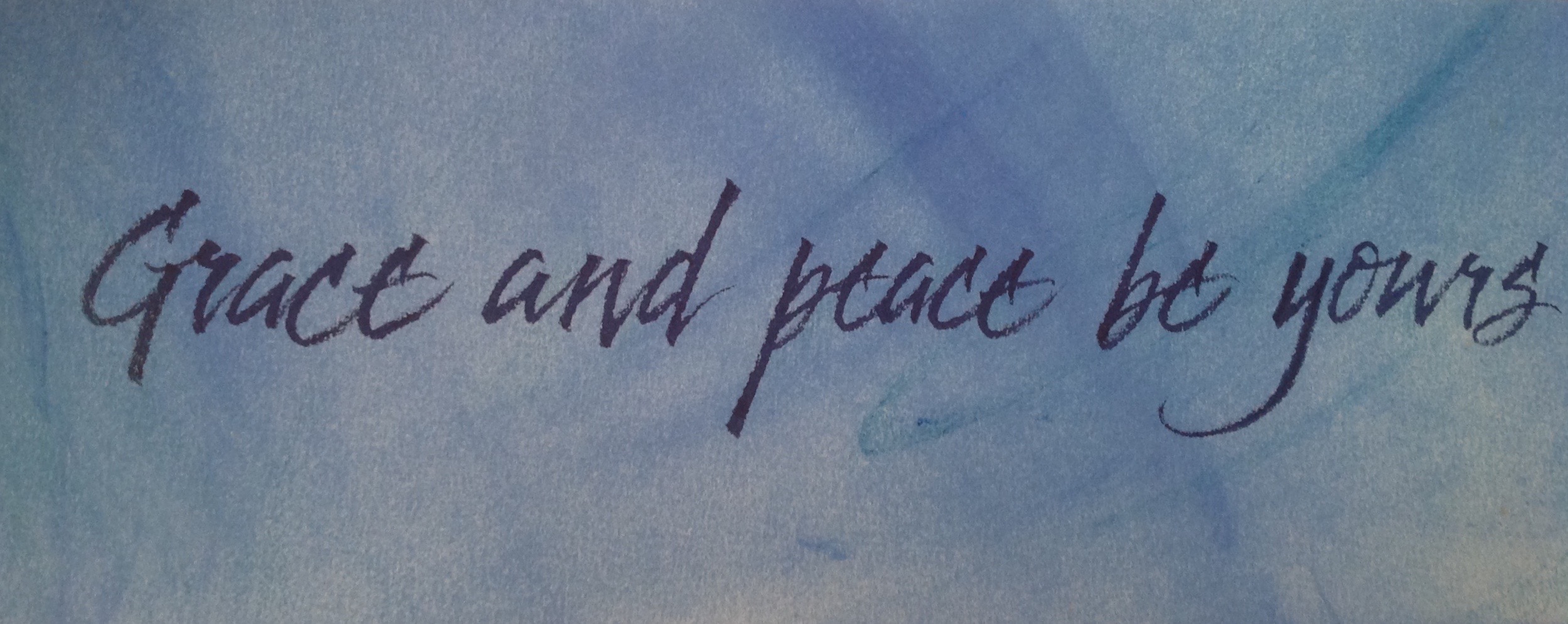
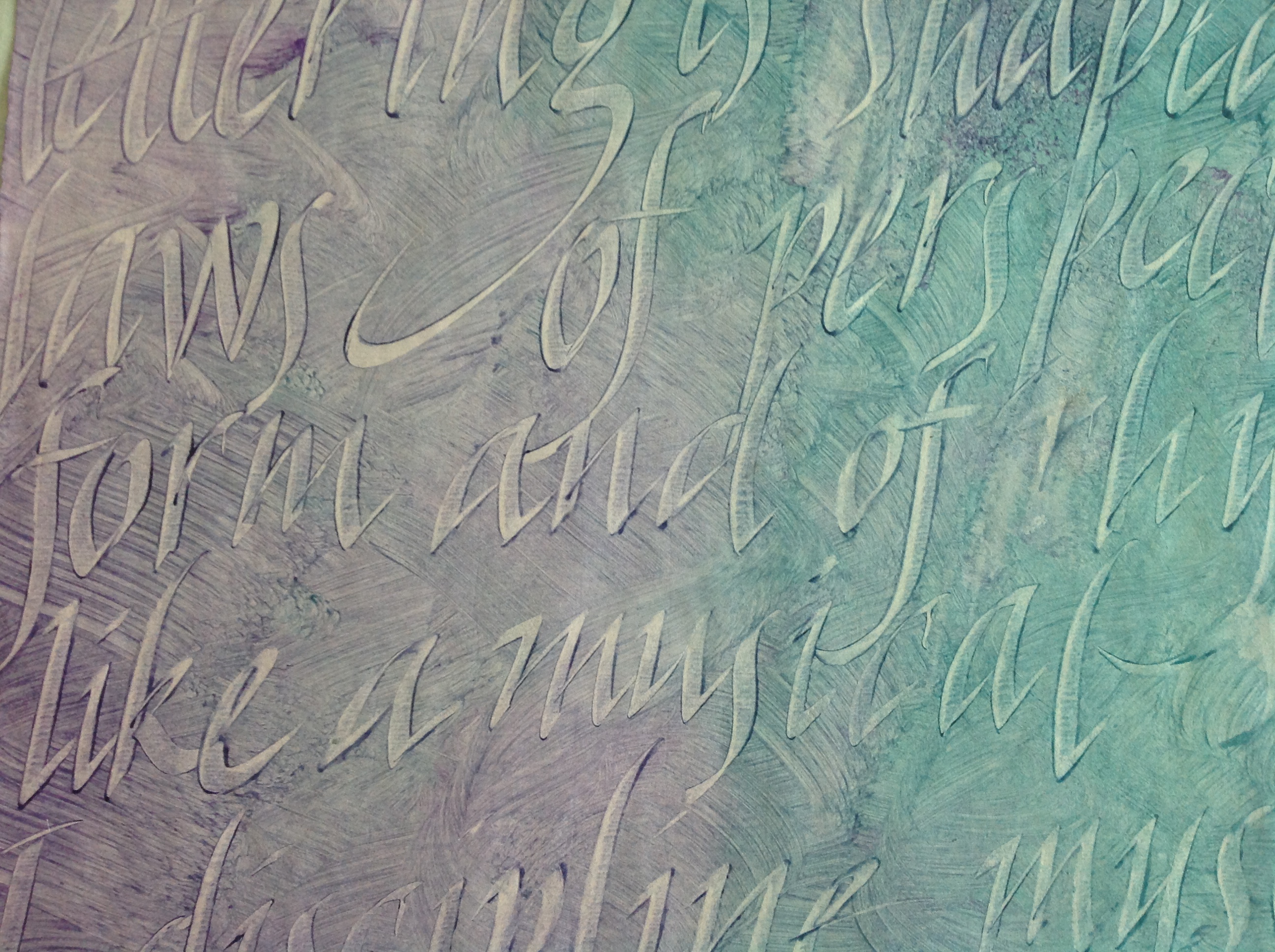
In the workshop, bind calligraphy experiments in a simple book format for later reference.
 An Artist's Journey