All skill levels — 1- to 2-day workshop
Learn Willow
Charles Rennie Mackintosh (1868-1928), a Scottish architect, designer, and painter introduced his distinctive lettering during the art nouveau period. The letters first appeared in the captions on his architectural plans. Subsequently, a number of font designers based their typefaces on his handwritten letters.
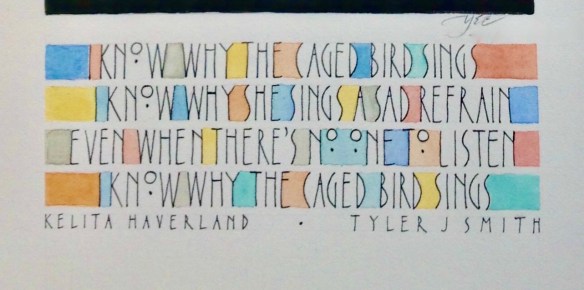
I adapted Mackintosh’s hand for a commission, and called it Willow (after his Willow Tea Room designs). It is taught as a hand drawn monoline style and can be stacked for texture and tinted to mimic his famous stained glass.
Whether you’re new to calligraphy or want to polish tarnished skills, the Willow hand will ease you into drawing letters with confidence while sharpening your critical eye to notice shape and line quality.

Novice and skilled calligraphers will pick up studio tips while designing a composition using their new-found letters.
Decorate a Garment
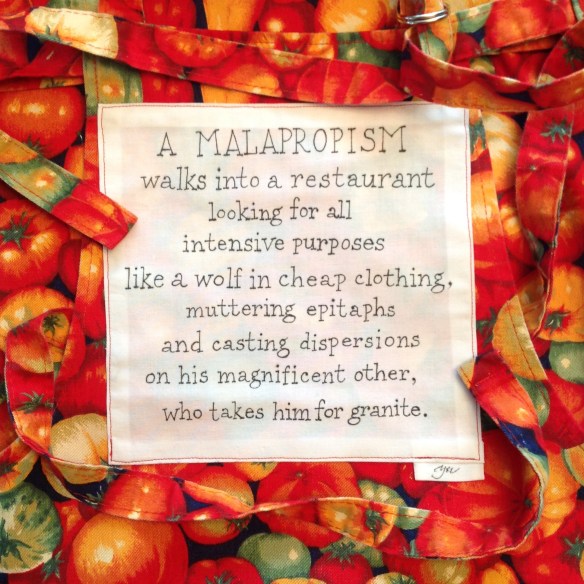
Need more time to master Willow? Spend a second day scribing text on a pre-made cotton garment—decorate a new item or give life to that much-loved closet piece. Create a washable, wearable work of art.
Lettering on fabric is slow and deliberate, allowing you time to master the letter shapes. Textile markers are easy to use for monoline alphabet practice.
Long after the workshop is over, you’ll be showcasing your hand lettering on a one-of-a-kind item!
Monoline Alphabet: Your Choice
The Willow class can easily be adapted. Rather than focus on Willow, students with experience in any monoline hand can spend a day learning about lettering on fabric and then scribing on a pre-made cotton garment—new or upcycled. Novices are welcome to use Zentangle or their own handwriting.
 An Artist's Journey