An experiment in denim, design, and second chances
It all started when my husband asked about recycling several pairs of jeans. The knees had holes and none of the pockets could reliably contain keys or coins. What began as a practical question about cast-offs became an evolving creative experiment in salvaged denim.
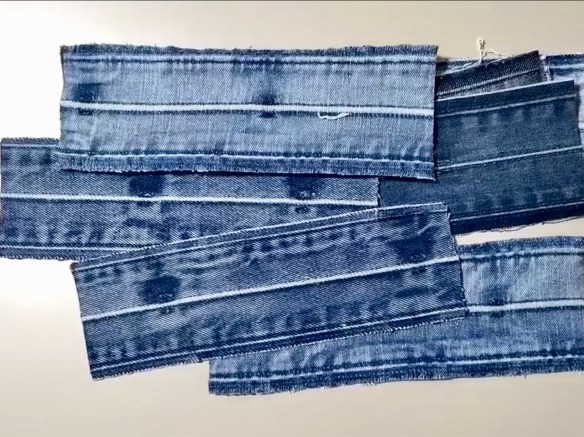
At the time, I was deep into my ephemera challenge to use up studio supplies. The jeans landed on the workbench while I considered whether their usable parts could become a tote bag. I was especially drawn to the horizontal lines of the waistband, the dark patches behind worn pockets, and the French seams with double rows of orange stitching. The indigo portions offered recognizable patterns that could be recombined in a mash-up.
Initially, two zippered tote bags emerged. The first was lined with remnants from a household sewing project, and the carryall included several pockets, including one to accommodate a water bottle. As the scraps grew smaller, creations took the form of patchwork pencil cases and small pouches.
I have an insatiable curiosity about materials and designs, and I don’t mind disappearing down rabbit holes. Soon I was absorbed in denim bag videos and online denim scrap groups, discovering an entire creative universe I did not know existed.
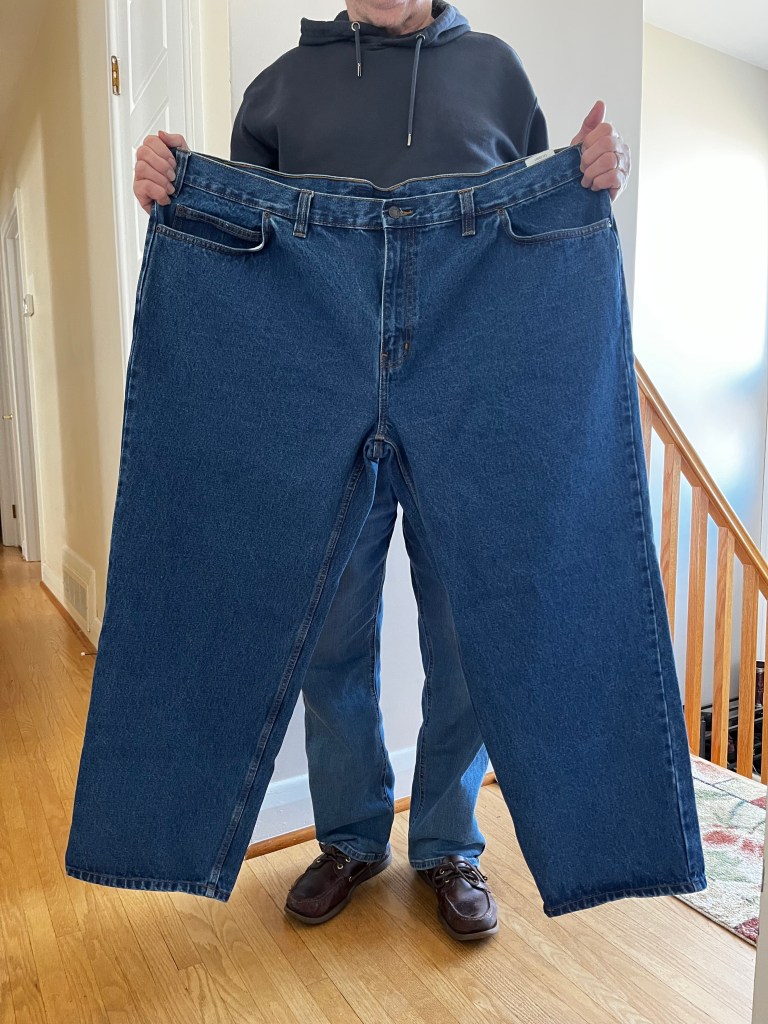
Offline, I scoured thrift shops for 100% cotton denim cast-offs. I found a local shop that offered never-worn jeans—the size 50+ men’s pairs that never found a home, sales tags intact! Their hems were not frayed, offering a patterned alternative to waistbands, and the pristine pockets could be incorporated into crossbody bags. I researched hardware options that suited the industrial look of denim garments, subsequently becoming a familiar face at Len’s Mills and Leather and Sewing Supply Depot.
After designing a dozen bags and a handful of storage pouches, I shared them with my calligraphy study pod. In response, Dorothy Yuki mailed countless yards of vintage Levi Strauss thread from her days in the garment industry, giving me fresh impetus to experiment with even more indigo!
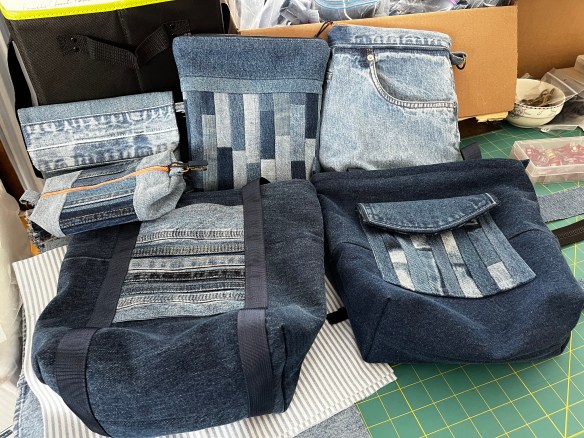
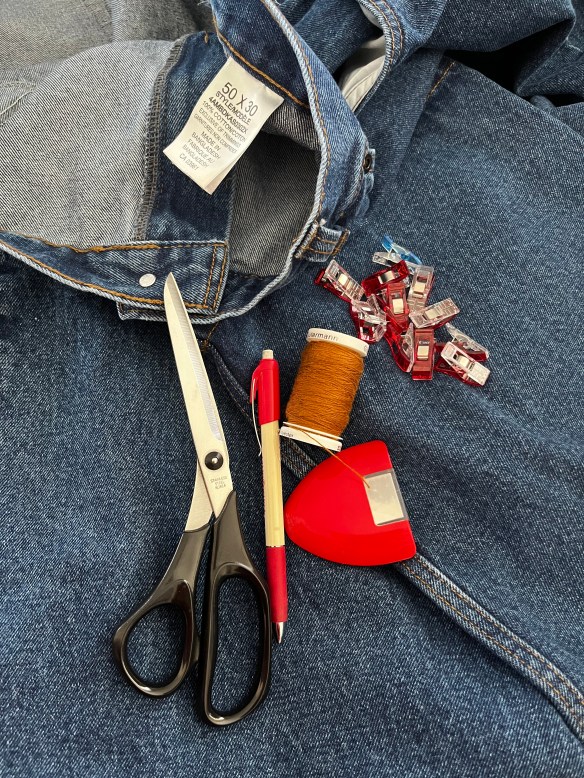
Repurposing denim jeans, even new ones, is a labour of love before any work at the cutting table begins. Sewing does not start with laying down pattern pieces on a bolt of indigo; the raw material comes from sturdy, well-stitched jeans. Harvesting denim involves hours with a stitch ripper, deconstructing a stack of seams while orange threads scatter throughout the living space.
After separating the components—waistbands, pockets, hems, seams, and belt loops—I recombined pieces in ways that both featured and disguised their origins. One early experiment was a water bottle carrier. The last remaining remnant on hand was the dark patch behind a pocket. Did I want that unmistakable rear-pocket area featured on my caddy? I collaged scraps to camouflage it—not cover it completely, but enough to redirect the eye. That is where the notion of painting with indigo began.
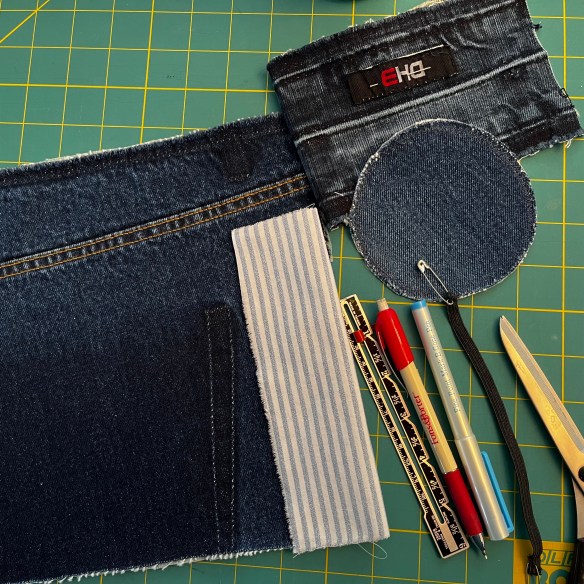
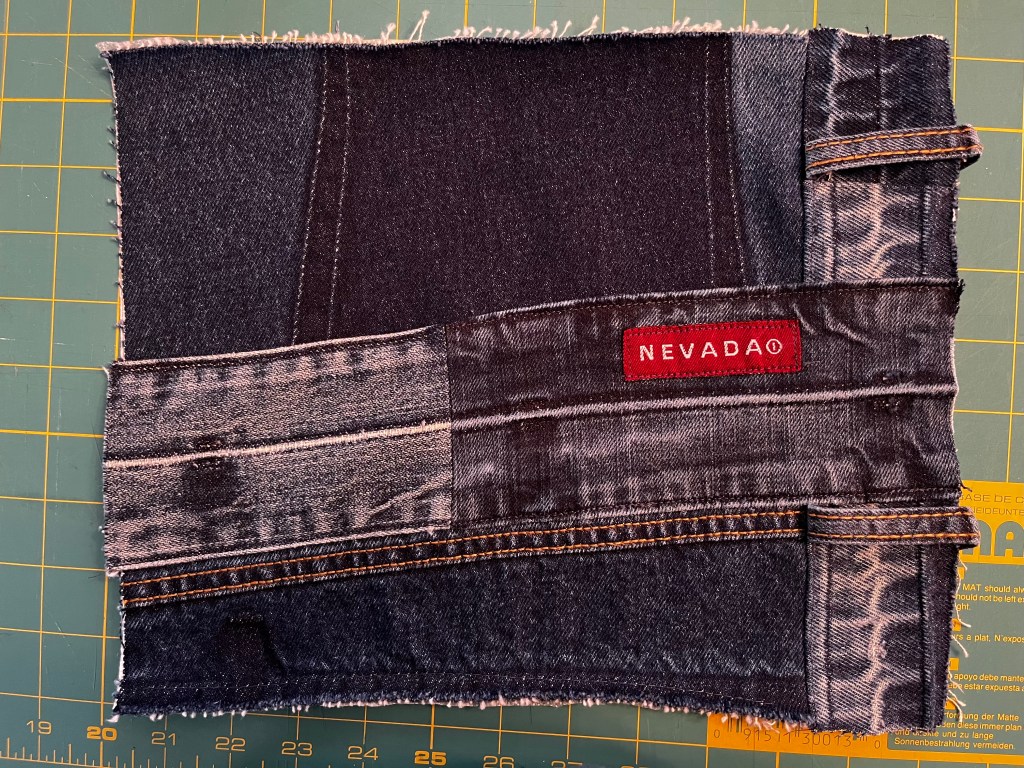
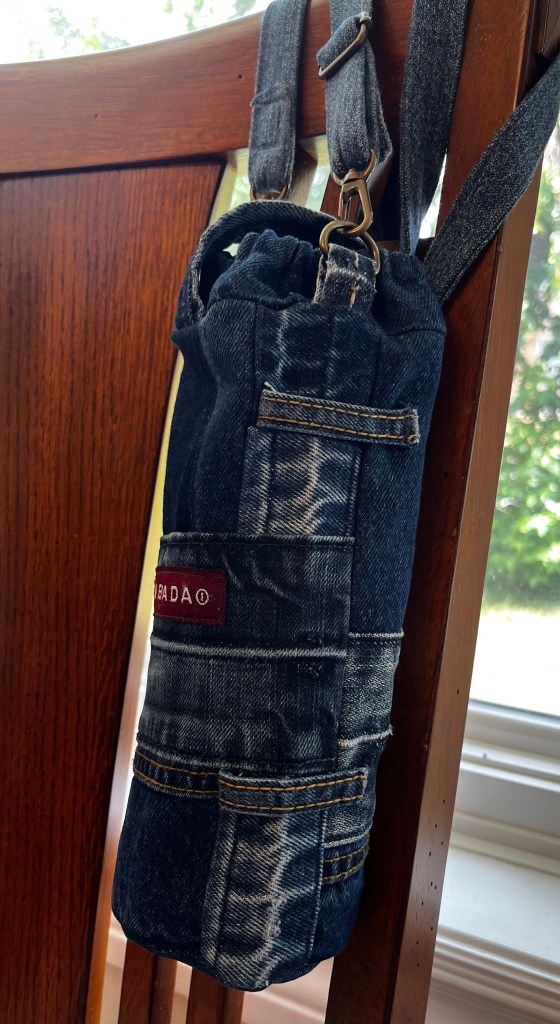
Each tote takes at least one day to design and sew—sometimes up to three. Inspired by what I see online, no two of my designs are exactly alike. I was not interested in line production. Each pair of jeans is a different size, and the blues range from faded washes to deep indigo. The challenge was to find the uniqueness in each swatch of raw material and pull the components into a pleasing composition. The advantage of painting with indigo is that the process is reversible. Many hours were spent with a stitch ripper undoing ideas that sparked joy—but not results.
2026 has become the year of the indigo project.
After sewing more than 50 bags and pouches, I have run out of storage space—but not ideas! Bins of bags are neatly stacked in the living room by the piano, waiting for their next life beyond my studio. When my husband asked what I planned to do with all these bags, I realized the project had moved beyond recycling. Painting with indigo had become a study in material, design, patience, and possibility—proof that what is worn out can still be transformed into something functional, attractive, and entirely new.
 An Artist's Journey